Armadas
Then and Now

In July 1585 Queen Elizabeth I wrote:
And if you suppose that princes’ causes be veiled covertly that no intelligence may bewray [reveal] them, deceive not yourself: we old foxes can find shifts [cracks] to save ourselves by others’ malice, and come by knowledge of greatest secret, specially if it touch our freehold.

Elizabeth I of England was called ‘The Pirate Queen’, ‘Heretic Queen’ and ‘She Devil’ among other uncomplimentary nicknames by the most powerful man in the world – Philip II of Spain.
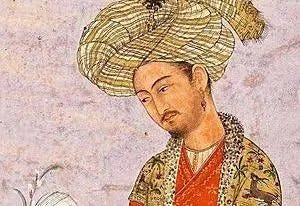
Why was Philip the most powerful man aside from his conceit The World is Not Enough? (No, you weren’t the first, Mr Fleming.) Long gone were Alexander the Great, Genghis Khan and Timur’s regimes in central Asia. The great Khan’s and barbarous Timur’s descendant Babur had established the Moghul Empire from 1526 in most of the Indian subcontinent, creating a powerful and early Islamic state, unworried by European affairs.
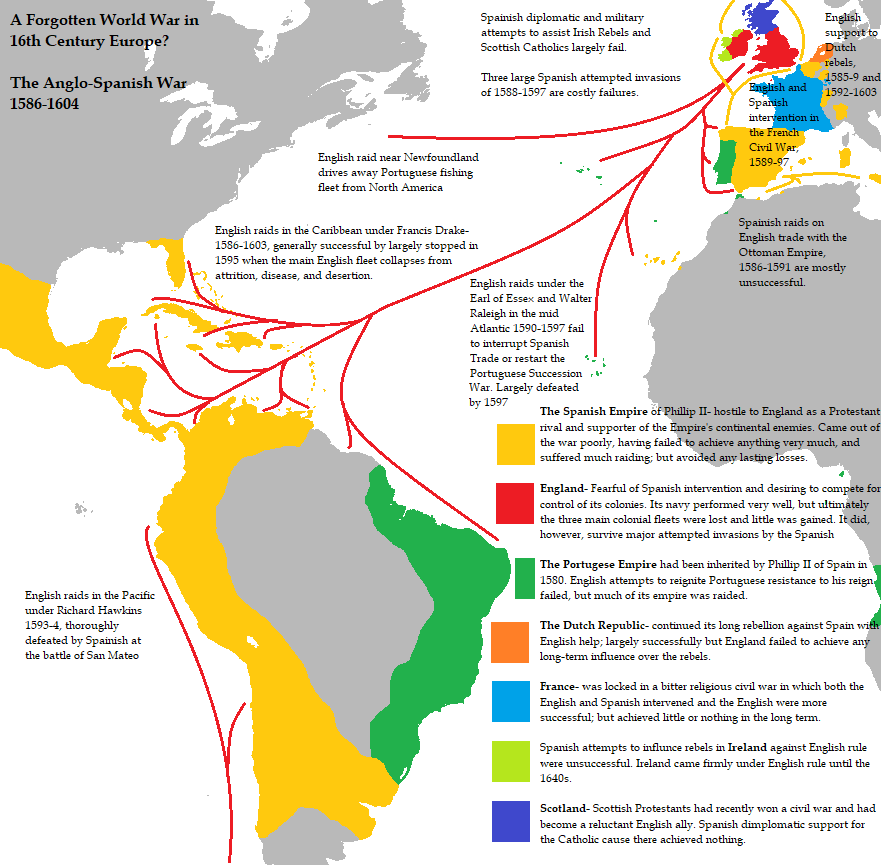
Philip II led the first and forgotten world war. In the Americas, he took over the Portuguese Empire and built on the vast Spanish empire with his conquistadores. In Europe, his man the Duke of Parma, was leading a merciless war of attrition against the Dutch rebels in Habsburg Netherlands that would last eighty years.
When Elizabeth wrote the statement above, its centre of European trade, Antwerp, was expected to collapse. The powerful Guise faction of France (of which Mary Queen of Scots was a member) was in the Spanish king’s pay. The latest assassination attempt against Elizabeth of 1583 had failed. Elizabeth’s only ally, William of Orange in the Netherlands had not been so lucky. The Marquis of Santa Cruz claimed the scalp of William of Orange and capitalised on the ‘timely’ death of the French Duke of Anjou, who had once courted Elizabeth as her ‘frog prince.’ With the success of William of Orange’s assassination, Santa Cruz was placed in charge of the invasion force – the famous Spanish Armada.
What gave Elizabeth I her edge was a sleeker, faster, cunning navy and a state-of-the-art spy network – or more accurately multiple spy networks. Her intelligence led her to strike decisively in 1582, when she unexpectedly expelled the Spanish ambassador Mendoza. Three years later, Philip retaliated, successfully luring London merchantmen to help the Spanish people, who he claimed were starving after a bad winter. The English had his personal guarantee of safe conduct, and Spanish payments would be made at fair-market prices. But it was a trap. Dozens of London merchantmen were captured after delivering tons of corn at Bilbao. Only one ship, the Primrose, made its getaway because it took pre-emptive action. The master of the Primrose returned to London, not only with valuable hostages but written proof of Philip’s trap: the Spanish king’s commission – signed the week before in Barcelona – to seize all ships from ‘heretic countries’. Elizabeth redoubled her spying efforts and prepared for the inevitable attack on England.
The war played on across the world. Elizabeth unleashed her ‘dragon’ – el Draco – Sir Francis Drake, who became an evil fixation for Philip. The more Drake plundered Spain and its colonies, the worse it became. Meanwhile, spies and the admiralty advised the queen wisely: create an early warning system for the well-telegraphed ‘Enterprise of England’ and build more sleek, even faster ships. The moment Spanish ships were seen off the coast of Cornwall it took just under fifteen minutes for word to reach her and her navy by setting alight beacons from Lands’ End to London.
Philip II listened to no one. He refused to let his generals and admirals mount their ‘Enterprise of England’ without his interference. He approved everything and was often seen in the small hours of the morning pouring over mountains of paperwork at his massive desk, his arthritic fingers struggling to write critical margin notes on most paragraphs. It was his equivalent of going onto ‘Truth Social’ to control events.
Still, Philip consistently had one war aim: conquering England. But he knew he needed boots on the ground to succeed. For him that meant a fancy invasion plan, which delayed the Armada, losing precious years. Worse, the Marquis of Santa Cruz did the unforgiveable thing and died before the mighty Armada sailed. Santa Cruz’s successor Medina Sidonia was his ‘yes man’. The Spanish Armada – the first grand naval battle between two European sovereign states was intended to take England by storm – was doomed to become a great Spanish failure. The English were well-prepared for the ‘shock and awe’. The Spaniards were outnumbered, out-thought and outrun by the English, despite a fifty percent greater firepower.
Good timing in war is both ephemeral and essential. As Field Marshal Helmuth von Moltke wrote in the nineteenth century: ‘no plan of operations extends with any certainty beyond the first contact with the main hostile force.’
NOW, some have remarked that the American president and his Secretary of War Hegseth lack experience in warfare, replacing expertise with ‘shock and awe’ in Iran. Unlike Philip II, the president seeks to mask his woolly regime change agenda as ‘saving the world’ from Iran possessing nuclear weapons. Operation Epic Fury is intended to replicate what he did in Venezuela.
But surely the war aim is to destroy Iran’s missile arsenal and production sides, degrade its proxy networks and annihilate its navy. Any regime change, like Venezuela, would come from within, but Trump had no suggestions – and for now there are no takers. So, he is forced to claim this is a pre-emptive war of counterproliferation. Hmm.
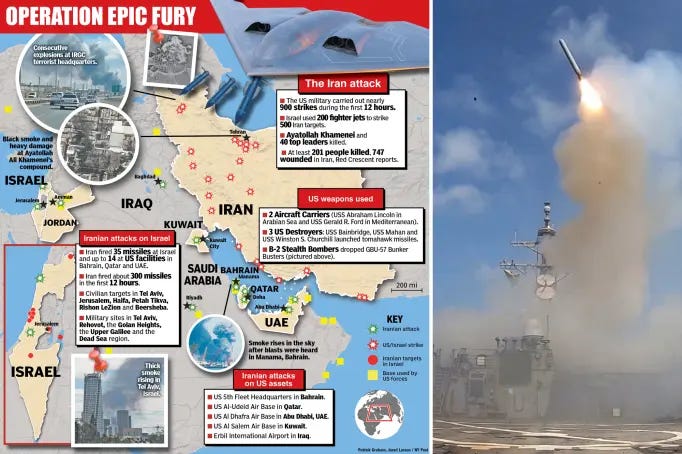
The US air force was made ready and US naval armada sent out when there was ample warning that Trump’s patience – never his strongest point – was wearing thin during the three February rounds of talks with the Iranians. Five Eyes (the combined intelligence organisation comprising intelligence officers from the United States, Britain, Canada, New Zealand and Australia) advised their countries’ cabinets of the situation and all were aligned to the USA, that is, save Britain.
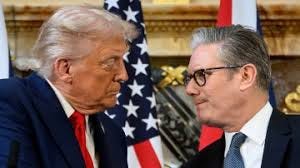
Our prime minister thought like a barrister still operating in chambers about international law rather than a leader at 10 Downing Street. He took legal advice from a man with scant experience of war. His cabinet has no expertise either. Starmer denied access when the US asked ‘rhetorically’ if it could use their bases on British soil – so the ‘no’ came as a shock. With pats on the back, Starmer believed he had ‘a good week’.
The US Secretary of State for War Pete Hegseth derided the British as ‘clutching their pearls, hemming and hawing about the use of force’. Political correctness and international law had no place in war, he said. As much as I hate to agree, Hegseth has a point. Internationally, Sir Kier seemed weak, incapable of seeing that international law has always been ‘more honoured in the breach than in the observance’ as Shakespeare’s Prince Hamlet knew. Nationally, he had seemingly made a popular decision, so the PM decided to publicly adopt a condescending stance towards the United States. Any child knows that you do not publicly ridicule your bullyboy closest ally – who also holds the kill switch on your nuclear weapons.
All that said, there is no doubt that Iran has harboured and continues to have nuclear ambitions for belligerent purposes for the past forty-seven years. They have never wavered from that stance, even as they toyed with previous presidents and prime ministers. Advice from Five Eyes and other intelligence sources stated that the threat from Iran exists but was not imminent. Even so, the draft-dodging president and the inexperienced Hegseth are two macho men in a hurry to get that peace prize and control the world’s oil resources. The utterly inexpert Hegseth now strides on the world stage with the confidence of a novice that it will be a 5–6–week war to save the entire world from Iran’s weaponry and destabilising influence either directly or through its proxies.
Experience says, the first rule of conflict is: never telegraph your weaknesses. A prolonged war will lose the ebbing support of MAGA. Russia is already providing intelligence to the Iranians. Iran’s response to the breathtaking aerial and naval attacks has been to lob missiles and drones at any neighbour and civilian targets within reach – even attempting to bomb Turkey a NATO ally – to ensure a longer more diplomatically damaging war to the ‘aggressors’. All without boots on the ground.
But. . .
‘This strategy’ seems to have inappropriately forgotten that the nuclear site centres around the Bushehr reactor which Iran operates with the expertise of the Russian State Atomic Energy Corporation Rosatom, which is still run mainly by Russian personnel. Any strikes on the reactor would pose significant radiological risks – not to mention a potential diplomatic disaster and expansion of the war if there were any Russian casualties. There has been no suggestion that ‘dismantling’ the reactor is a priority.
Worse, no one knows precisely where 400 kilograms of 60 percent enriched Iranian uranium is being stored. No one is saying where the Iranian scientists have gone or if they could pose continued risks as ‘bad actors’ under other flags. Joseph Rodgers, deputy director and fellow with the Project on Nuclear Issues (PONI) in the Defense and Security Department at the Center for Strategic and International Studies (CSIS) in Washington has posed these ‘critical questions’ and others to the US administration which increasingly sweeps away any opposition or intelligence through acts akin to King Philip II’s conquistador conceit: ‘Non sufficit orbis’ The World is Not Enough.