Beginnings
From Night Manager to Author… with thanks

Beginnings are always significant, powerful and scary. Dolly Parton’s beginnings were as the child of the ‘smartest man’ she’d ever known – her illiterate Daddy. Her beginning was in a small Tennessee cabin shared with 11 siblings and her parents. The only book was the family bible. All beginnings happen every day. It’s what we do with them that counts.
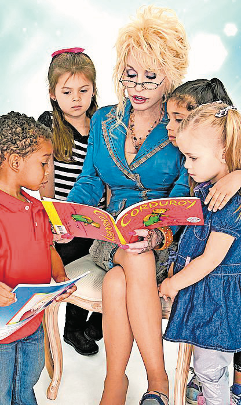
Long before Dolly became the Queen of Country and Western Music, her poetry and songwriting had its beginnings in a that cabin, along with a burning desire to help all children to learn to read – and enjoy reading from the youngest age. Dolly began the charity called the Imagination Library gifting story books for free to children under 5, making her Daddy so proud of her that he told her it was the most important thing she ever did. Since 2007, her Imagination Library has gifted over 75,000 books to British children and supports The Times campaign to help children read for pleasure. Over 275,000 young children have benefited from her phenomenal largesse. To register your child, just go to the Imagination Library website.
Some may wonder how the ‘Dolly Powerhouse’ began and succeeded from her humble beginnings. Today, she has the good wishes of millions. Many stand in awe of her sharing so much of her good fortune with others. Dolly applied the Mark Twain principle: ‘The secret to getting ahead is getting started’… aka beginning. Thank you Dolly for your all writing, your generosity and making such meaningful beginnings for so many young and old around the world.
Most of us in the writing community wish we could afford the largesse of a Dolly Parton or J.K. Rowling. Sadly, in the statistics released in 2022 by the Creative Industry’s Policy and Evidence Centre, the annual median earnings for the majority of writers was £7,000. Government support for ‘the arts’ has been scaled back and replaced to a certain extent by a generous ‘tax relief’ system for private investors in the performing arts. There’s nothing for books.
Yet, people still write. Would-be authors take courses to hone their craft, and agents are innundated with all manner of novels of varying merit (in the case of fiction) or proposals for non-fiction while publishers publish fewer books. The lesson here is if you want to begin to write, do not think you will earn a living wage. Real writers write because they love it and feel they have to. With that in mind, please do begin.
My personal writing career began as a child and culminated with the offer of a recording contract as a folksinger and songwriter when I was seventeen. I recorded half the album before I was reminded by my rather strongwilled parents that I was meant to go to university and the two careers did not mix. In those days I was dutiful – sort of, well almost – and in exchange for selling the rights to the songs, the sale to the record company helped pay my university fees along with odd jobs waitressing or even being a flower-girl for the singer Donovan onstage.
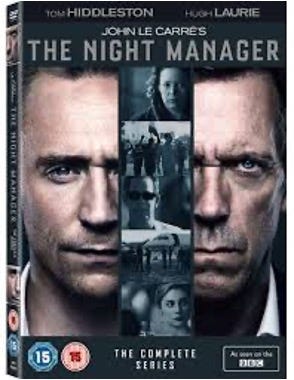
Fast forward over a decade to the last job I held working for someone else. I was a public relations manager at a four-star hotel and pulled the short straw once a month to become ‘the night manager’. I was no Jonathan Pine. John Le Carre’s book wasn’t his best in my opinion, but it made me giggle. While he was a giant in the spy writing world, he’d never been a night manager, and it showed.
My ‘night managing’ had no mod cons like a Smart Phone or Podcasts. Often our security cameras were too blurry to see what was going on, and the security guards were sleepy or watching tv. It was deadly boring – which was why I began inventing stories in my head while doing my tedious rounds – floor by floor. What made it bearable was my imaginings.
There was nothing romantic or ‘thrilling’ about it. I cleaned up after guests or their dogs who’d been sick in the corridor, liaised with the police to kick out noisome people, deal with domestic violence, AND more than once told people they could not have sex in the swimming pool. Once I had to handle a bedroom murder. The best thing about that job was it gave me rich pickings as a future author about human behaviour. I’d abandoned one career in songwriting and being a night manager convinced me to work hard and save up so I could become what I wanted to be: an author. Being a night manager was my beginning.
It gave me my long-term goal. Money had to come first as I was a single mum at the time supporting my three sons. Mountains of useful experience as an international consultant for governments, charities and high net worth individuals on heritage and conservation was all part of my learning curve. I understood power and greed by the end of it. History and people were my thing, and I spent years honing my writing skills while working as an independent consultant.
And here’s where my real beginning started. I had put in the time, laid the groundwork. I had published my first book after winning a competition in The Writer Magazine. Now I had to step off the cliff into the unknown. I found an agent who said I needed a platform. Diamonds he decided, since my stepdad worked in the industry. Not Tudor history as I wanted. To get my toehold on the first rung, I agreed. I made a successful pitch to a publisher, and my book was commissioned. And? I did as I’ve always done when writing a story: I refused to look at the blank page. I came to the page with my first 3 sentences in my head.
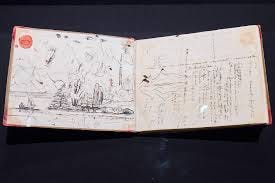
I imagine many writers and authors stare at the blank page. I never did, and only rarely wondered in my head ‘what next’. Granted I was writing non-fiction. In writing fiction, it’s much harder as the exhibits at University of Oxford’s Weston Library (part of the Bodleian Library) prove. I’ve yet to go to the John Le Carré exhibit about his writing but did go to the Write, Cut Rewrite exhibit featuring discarded ideas, fundamental changes, deletions, additions, notes and scribbles from great authors such as Mary and Percy Shelley, Jane Austen, Christina Rossetti, James Joyce, Raymond Chandler, Ian Fleming, Samuel Beckett, and John le Carré. Reading Raymond Chandler’s ‘book of phrases’ was a sheer delight as he not only set out ‘firsts’ in detective crime fiction but also had the most joyous descriptive texts. It was a wondrous peek at the ‘beginnings’ of the writing process of great minds.
We each have our favourite book beginnings, possibly:
‘It was the best of times, it was the worst of times…’ (Dickens A Tale of Two Cities)
‘It is a truth universally acknowledged, that a single man in possession of a good fortune must be in want of a wife.’ (Jane Austen, Pride and Prejudice)
‘It was love at first sight.’ (Joseph Heller, Catch-22)
‘When I wake up the other side of the bed is cold.’ (Suzanne Collins, The Hunger Games)
‘In the corner of a first-class smoking carriage, Mr Justice Wargrave, lately retired from the bench puffed at a cigar and ran an interested eye over the political news in the Times.’ (Agatha Christie, And Then There Were None)
‘Mr and Mrs Dursley of number four, Privet Drive, were proud to say they were perfectly normal, thank you very much.’ (JK Rowling, Harry Potter and the Philosopher’s Stone)
Or any other opening line from a song, play or poem – or other written words. These are the hooks that compel the reader to read on. These are the beginnings that decide a reader to buy the book. If they read on through the first paragraph, chances are they are at least intrigued.
Of all my books, the opening paragraph in The Ambassador about Joseph P. Kennedy’s time as American ambassador to the UK from 1938–1940 clearly sets the scene:
‘Tuesday, October 22, 1940
On the same day Adolf Hitler travelled south to the French border with Spain for talks with Generalissimo Francisco Franco, US Ambassador Joseph Patrick Kennedy bid his farewells to senior members of his team at the American embassy in London. As staffers shuffled out of the ambassador’s office, some were dabbing tears from their eyes while others sported half-hidden sly smiles. Despite their differences of opinion about the ambassador, each recognized that it was the end of a turbulent era of American diplomacy in Europe. In his two years and seven months in England, Joe Kennedy had been taken to the people’s hearts, then widely loathed. From the outset, he was feared and deemed insufferable by both the White House and State Department.’
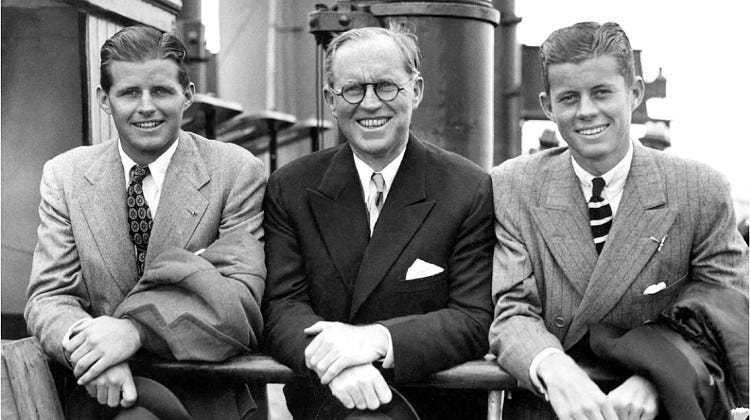
No other biography about Joe Kennedy concentrated on his actions to mastermind US relations with the UK between 1938–40. I was not surprised that the book did less well than anticipated, despite a front full-page great review in the Wall Street Journal. My editor thought it was because it was a ‘negative’ book about ‘the Kennedys’.
I said our timing was off. The Ambassador came out in September 2021. The USA was reeling from the allegations that President Biden had stolen the election from the 45th presidential incumbent – and that story rolled on and on and is still rolling. MAGA was already punching above its weight and didn’t seem to care about ‘old allies’, the Capitol Building or the Constitution. My editor agreed. It was time he said to commission Hitler’s Aristocrats, initially pitched in 2014.
I always saw Hitler’s Aristocrats (March 2023) as an accurate historical allegory for what would happen today if the firm but fragile foundations of democracies were attacked by bad actors. I take heart that MAGA supporters would ban it if they could.
Everyone’s beginnings in life or literature can change the world for the better. You can only do your very best. But maybe my very best is yet to come, and I should send a free copy of Hitler’s Aristocrats to Bruce Springsteen to thank him for his song, Streets of Minneapolis? Number 1 in 19 countries within 48 hours of its release (link below). The beginning of protest songs for 2026…